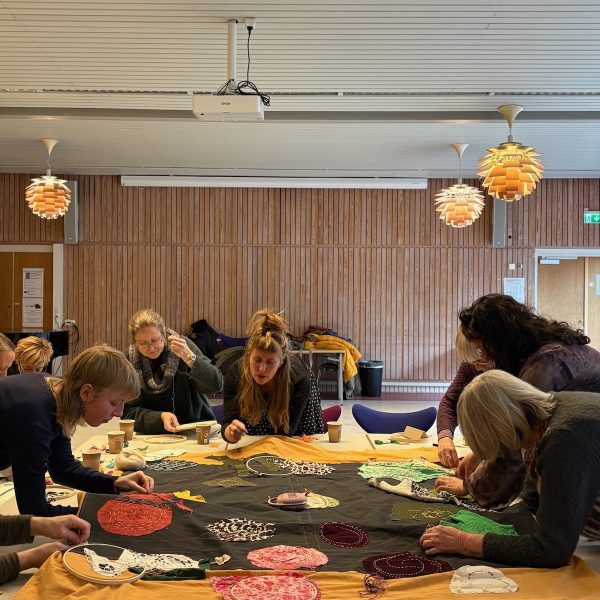
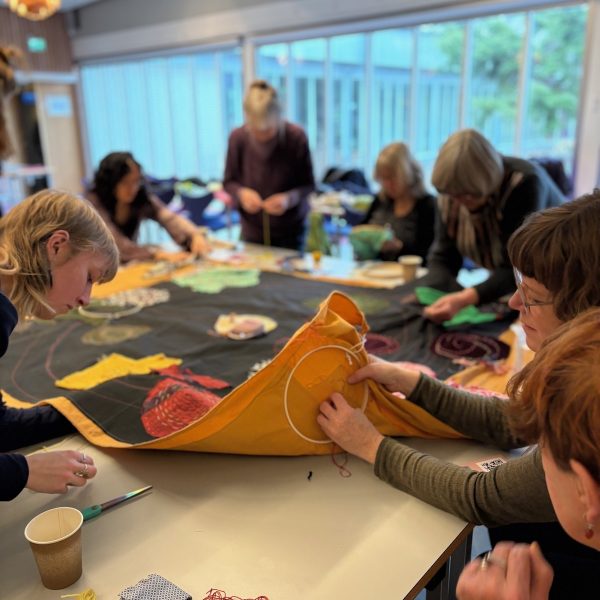
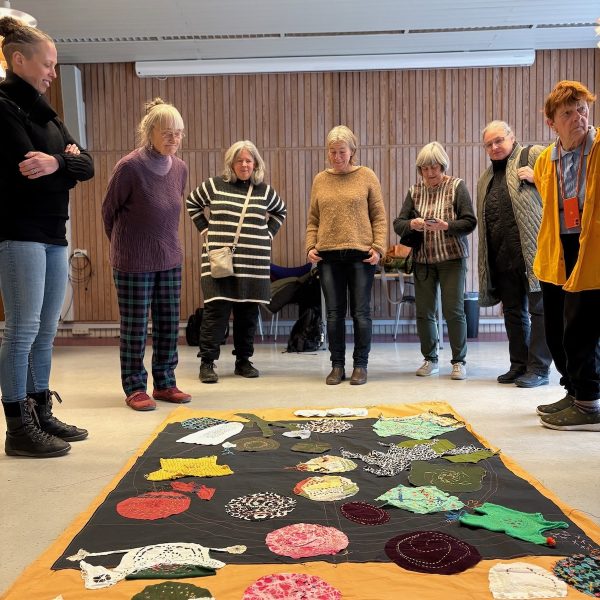
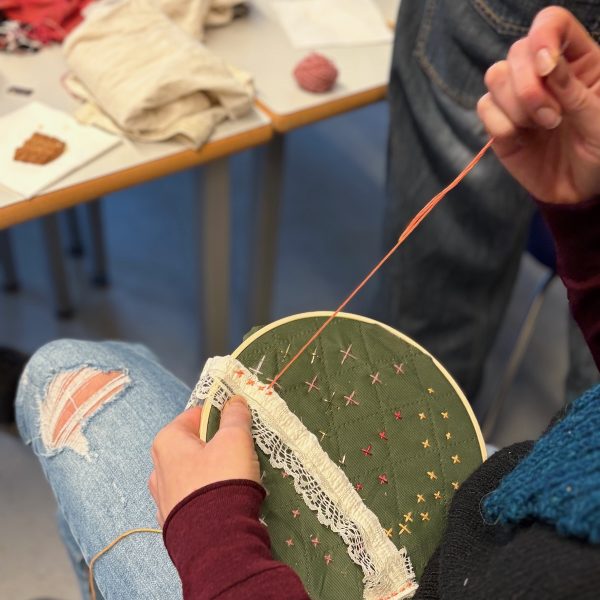
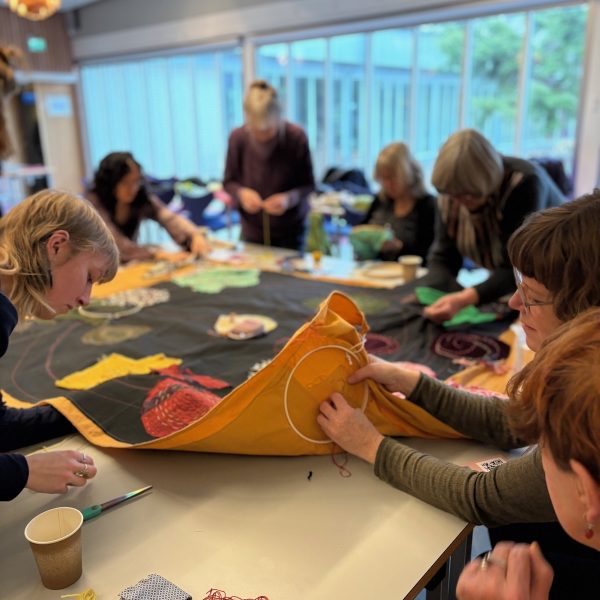
“Forvandling af tekstiler” was designed as a Living Lab workshop exploring how discarded textiles can be reintroduced into value-creating systems through craftsmanship, community engagement, and shared learning. The workshop was hosted at Rønne Public Library in Bornholm, Denmark, and brought together 12 participants in a real-world setting where experimentation, dialogue, and material transformation took place simultaneously.
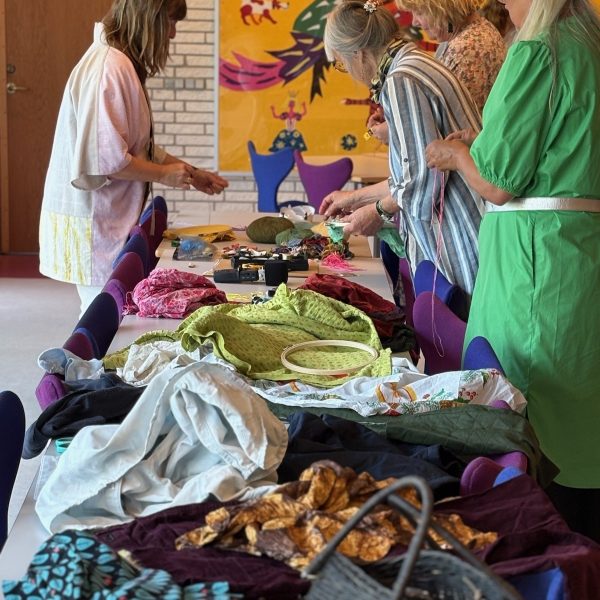
The workshop functioned as a test environment for circular economy practices by working directly with local textile waste, while also exploring sustainable value creation through hands-on making. Social impact was embedded in the format, as participants engaged in open knowledge exchange and collective reflection throughout the process.
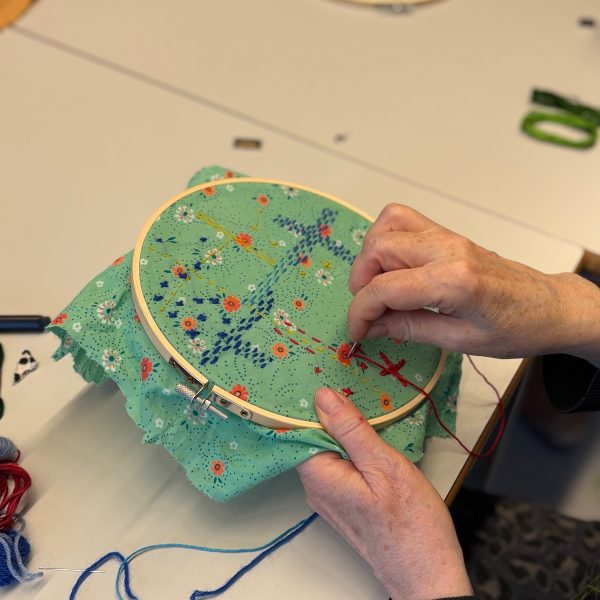
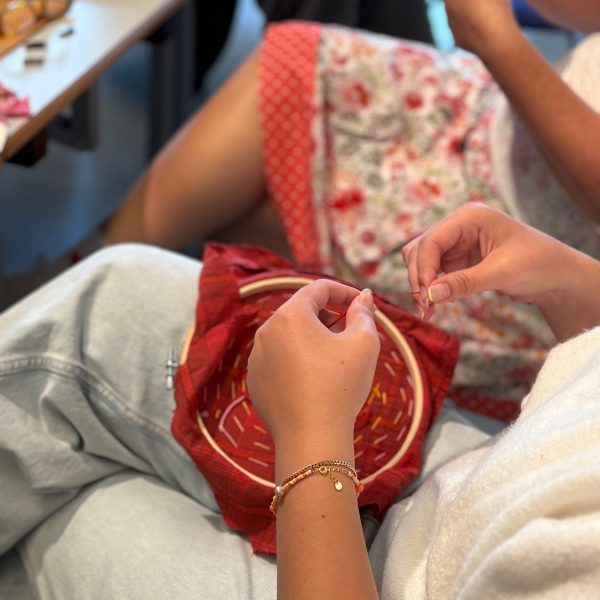
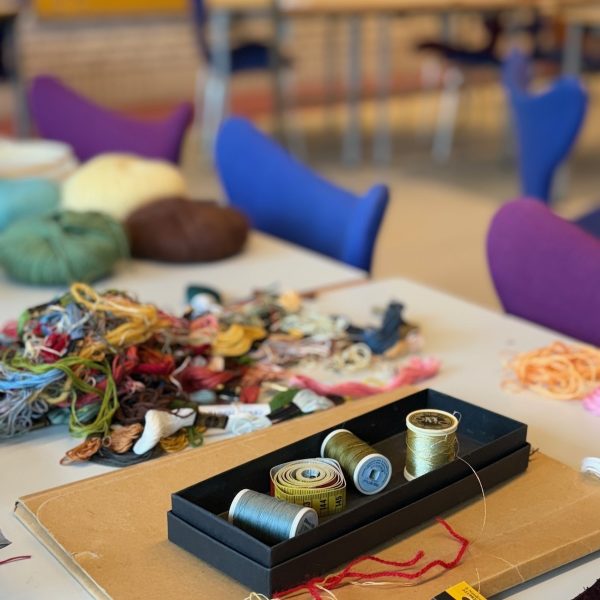
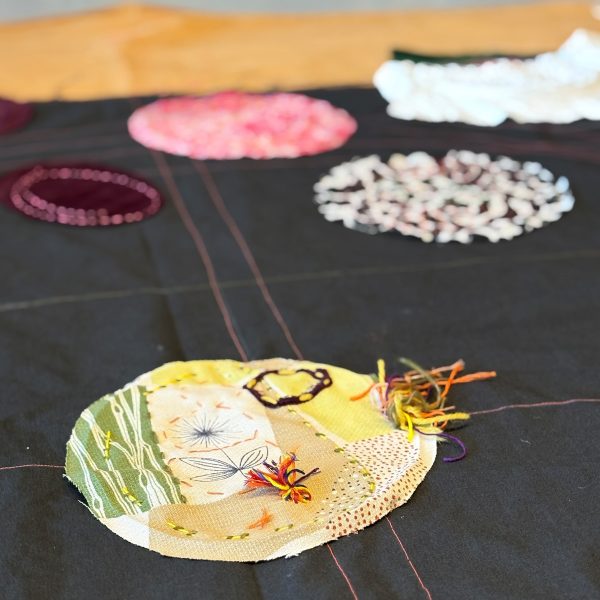
Participants worked closely with local textile artist Ann Charlott, who introduced simple embroidery techniques accessible to everyone, regardless of prior experience. By embroidering directly onto waste textiles, participants experimented with transforming discarded materials into new artistic and functional expressions, gaining first-hand experience of how modest craft interventions can extend material lifespans and generate new value.
Beyond the making itself, the workshop created space for informal and approachable conversations about sustainability. Participants shared experiences from their own everyday waste and craft practices, while Bornholm’s Zero Waste vision served as a shared reference point for discussions about both ambitions and real-life challenges. Curated books related to sustainability and textiles, selected by the librarian, were made available for participants and visitors to borrow, extending learning beyond the workshop itself.
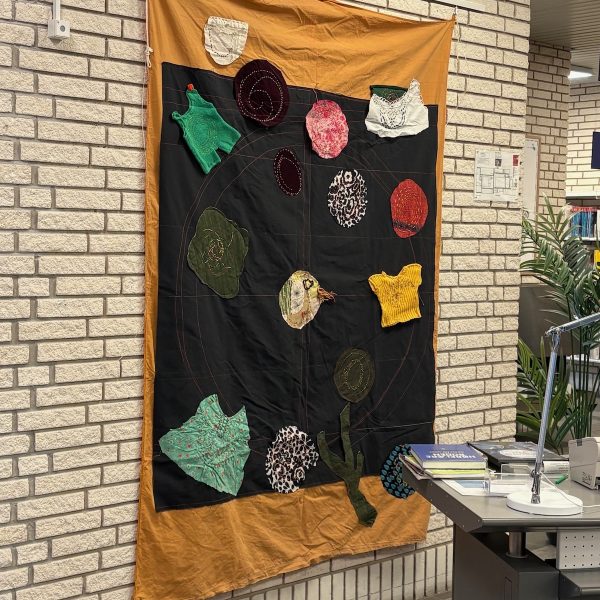
The outcomes include a collective textile artwork created by the participants and now displayed on the library wall, as well as process documentation that will be presented in a small exhibition at the library. Forvandling af tekstiler functions as a prototype for future sustainable business models that integrate waste reduction, craft-based value creation, community participation, and cultural and social sustainability. Due to high public interest, an additional workshop was scheduled for January 24, 2026.
Workshop No 1
Workshop No 2