Article by Alberta Menegaldo and Elena Raviola
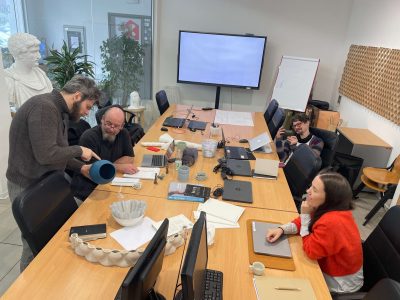
Can hands and code coexist in making? How? How do they play together? HEPHAESTUS tries to explore these questions in different ways and, this February, joining forces across partners, countries and funders, we have experimented with craftmakers’ residences at FabLab Venice.
The relation between craft and new technologies is one of the central questions in HEPHAESTUS, for our inquiry into the future and the renewal of craft work. So, this academic year, in the Swedish ecosystem, we wanted to focus our research and collaboration with the craft makers on new technologies in a learning journey together with FabLab Venice.
After a workshop at Stone Zone in Sweden, in September 2024, with our craft Sweden-based ambassadors and the FabLab, we decided to create a space for making with technologies and organized residencies of three craft ambassadors from Sweden at FabLab’s innovation space. During the Hephaestus kickoff meeting in May 2023, the craft ambassadors visited the FabLab, and they had some memories of the place and the questions the visit raised but no in-depth knowledge of the makers’ space at the FabLab. This did not stop the curiosity of Lukas Arons, Linnea Dalstrand and Rob Curran, who took up the challenge, nor the hospitality and openness of the FabLab to host them for a two-week residency in Venice.
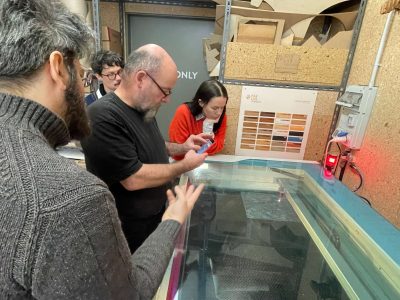
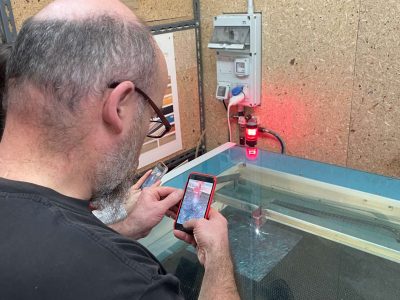
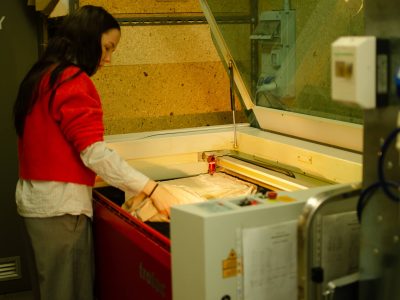
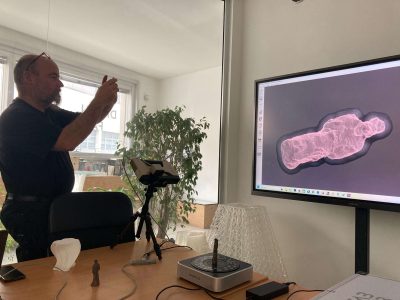
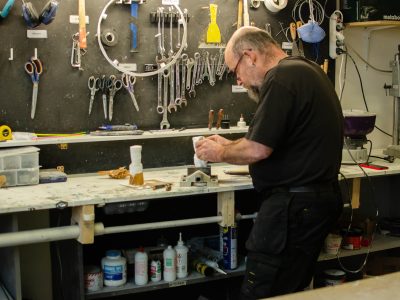
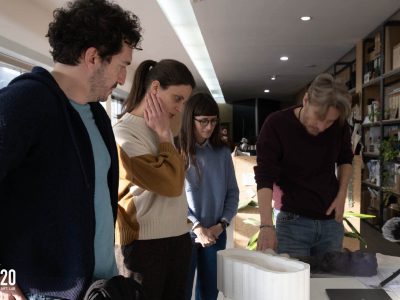
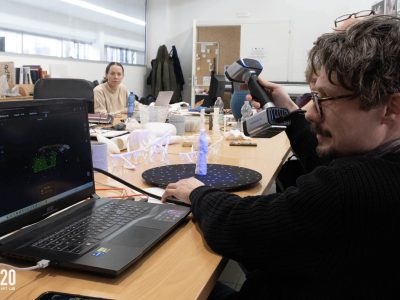
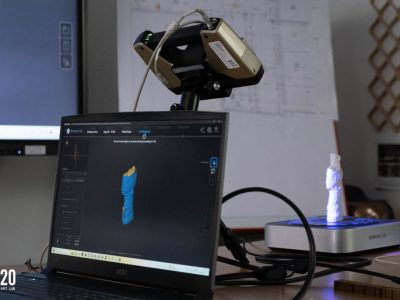
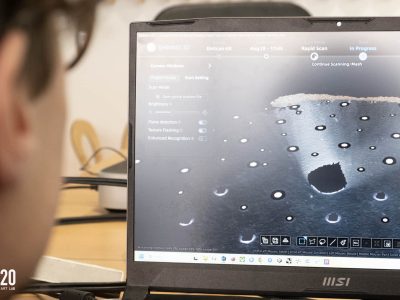
Between 10 and 22 February, the FabLab hosted Lukas, Linnea and Rob and guided them through a series of experimentations, reflections and encounters where their craft experience and skills could meet new technologies, like 3D scanning, 3D printing, and laser engraving.
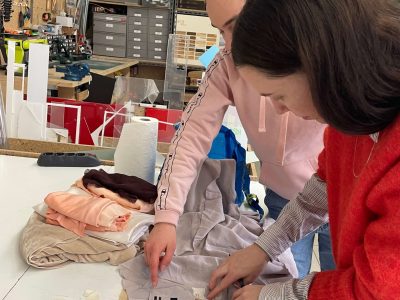
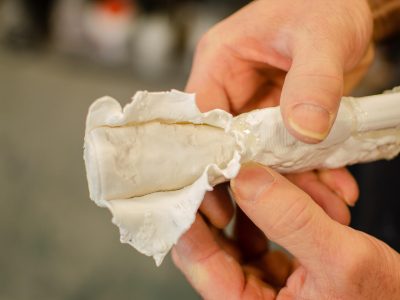
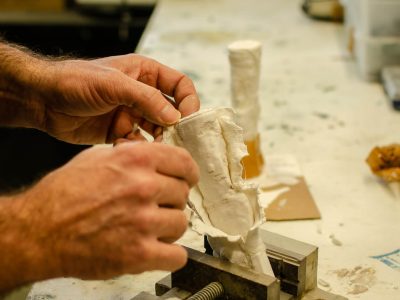
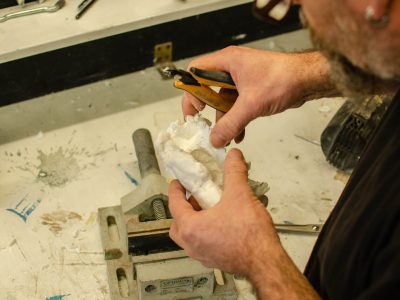
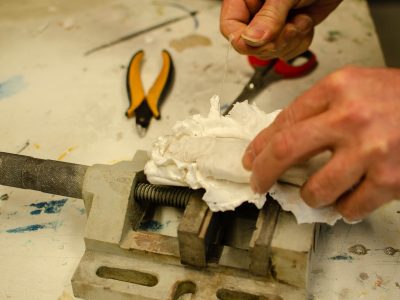
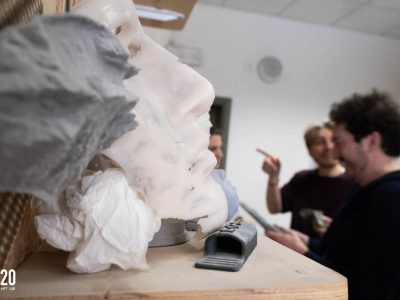
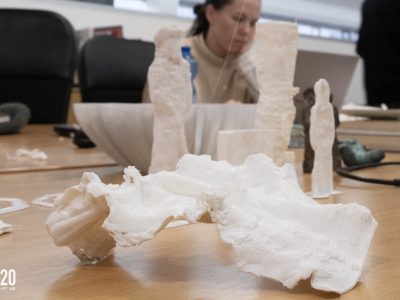
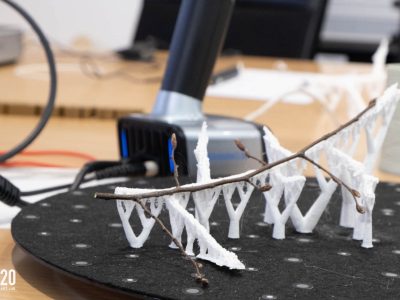
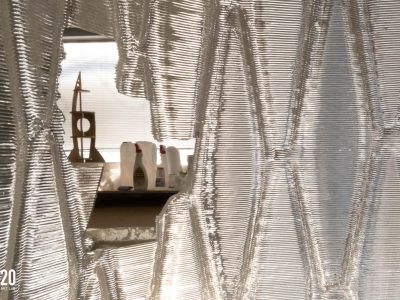
While almost not having previous experience in the use of digital technologies, the craft makers embraced the challenge with enthusiasm. After a one-day introduction to the facilities and a brief overview of the opportunities, they started to define a specific topic or area of interest to investigate during the residency. Lukas decided to explore 3d printing as a tool to explore skin, surfaces, paired with casting processes; Rob dived into an iterative research process that involved 3d scanning and printing multiple times while also pairing natural branch shapes with artificial branch-like supports that are part of the 3d printing technology; Linnea experimented both with laser engraving on textile and with scanning/modelling and resin 3d printing to investigate natural decaying shapes as exhibition supports.
The two-week experimentation has been a great success both for the craft makers, the Fablab Venezia and the University of Gothenburg: we discovered how digital fabrication technology can provide creative inputs and new ways to travel one’s research path in alternative ways, unveiling that often digital-aided processes do not disrupt the way experimentation and artistic production traditionally happens. Indeed, the craft-makers appreciated that digital processes could be embedded in their way of thinking and investigating, but acknowledged the fact that often a consultant or an external provider would be needed in order to have the chance to explore such processes. This opens an important dialogue, which will be continuously explored within HEPHAESTUS, on how to build innovation ecosystems for craft to flourish.
The outcomes of this research will be presented at the Rohsska Museum in Gothenburg between May 20 and June 4, 2025, together with the D20 Art Lab’s exhibition Brave New World and other experiments of datafying craft and crafting data. Please, follow us for more news and join us at the vernissage on May 21 and at the panel debate at the finissage on June 4.
The residencies were co-financed by HEPHAESTUS and by the Torsten and Wanja Söderberg Professorship in Design Management, University of Gothenburg. They were organized with the support of Business and Design Lab, University of Gothenburg.