

The second round of the Hephaestus Tech&Craft residencies took place at Fablab Venezia in April 2026. Following the positive outcomes of the two-week experiment in February 2025, we decided to extend the program and host two more episodes of this pioneering format of creative research and process innovation.
The Hephaestus residencies provide a free space for investigating the use of digital fabrication technologies in craft processes. They are specifically structured for artisans with few or no competencies in digital fabrication. Spanning around two weeks, the residencies have no pre-fixed objective beyond providing craft makers with the opportunity to experiment and research in a supportive and welcoming environment. The residencies have a loose schedule that allows for iteration, questioning, and curiosity, and participants are supported by experienced mentors and the Fablab team.
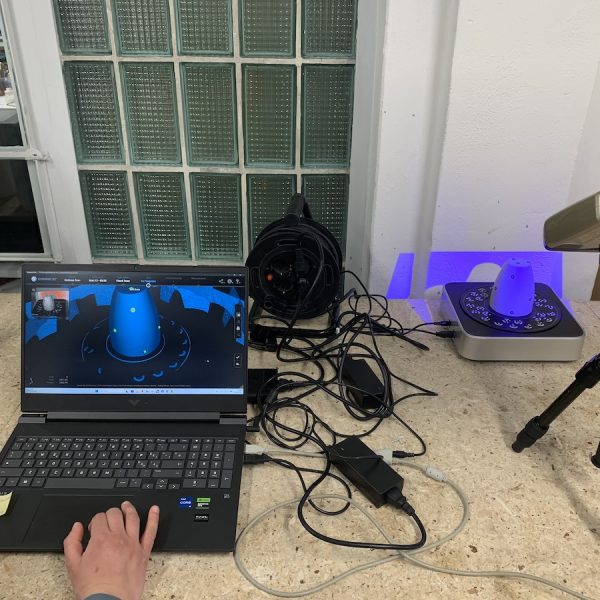
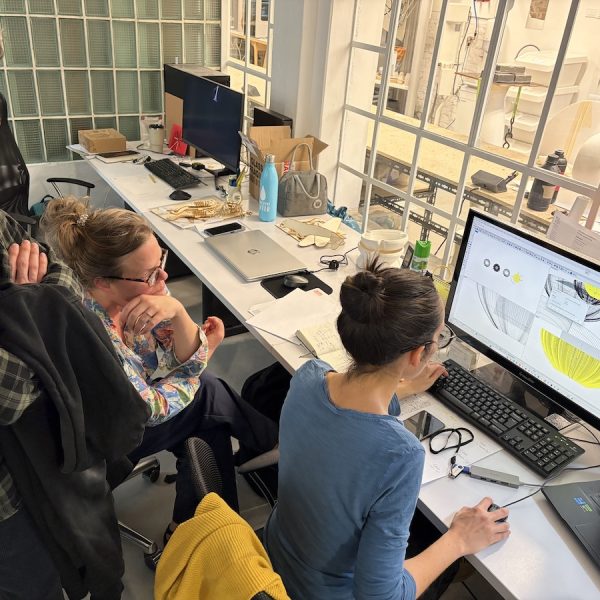
In April 2026, we were pleased to welcome back Rob Curran, a Craftmaker from the Swedish ecosystem who works with wood. He decided to return after his positive experience in 2025, when he investigated the topic of losing detail through iterative translation from physical to digital and learned how to use the 3D scanner (thus becoming able to help others with the equipment they already own in Dals Långed). This year, he decided to spend time exploring advanced modelling, particularly parametric design.
Parametric design is a computational approach to form-making in which geometric outcomes are defined by adjustable parameters and rules rather than fixed shapes, allowing the designer to explore and modify complex configurations by simply changing input values.
Curran aimed to develop a deeper understanding of the logic of algorithmic design and evaluate the potential integration of parametric thinking into craft production. This integration would extend beyond design and production purposes, serving as a framework and inspiration for manual action. To achieve this, he chose to focus on a specific project he was developing. Having a concrete application was important for facing the challenge of immersing himself in the parametric world and understanding how shapes and arrays could be managed through Grasshopper tools. His goal was ambitious because parametric design requires time to learn and master. However, focusing on the logic of making rather than only producing a physical output allowed for interesting reflections on possibilities and hybridization.
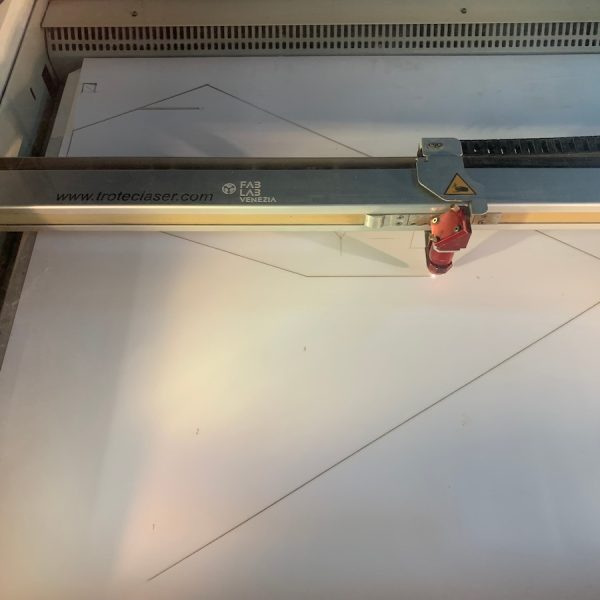
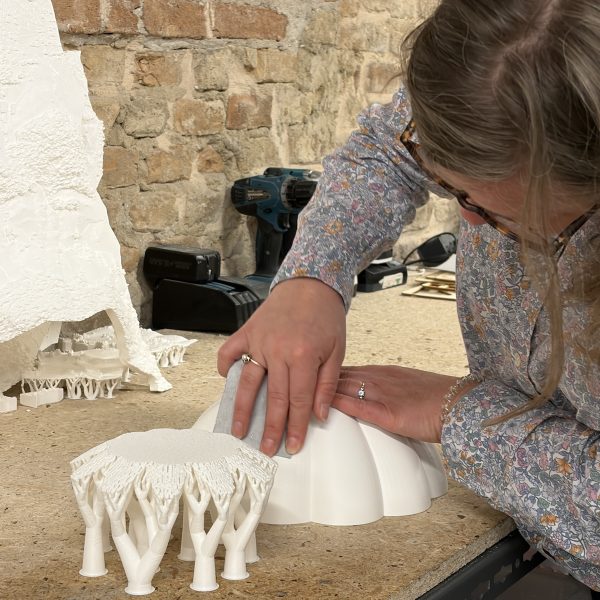
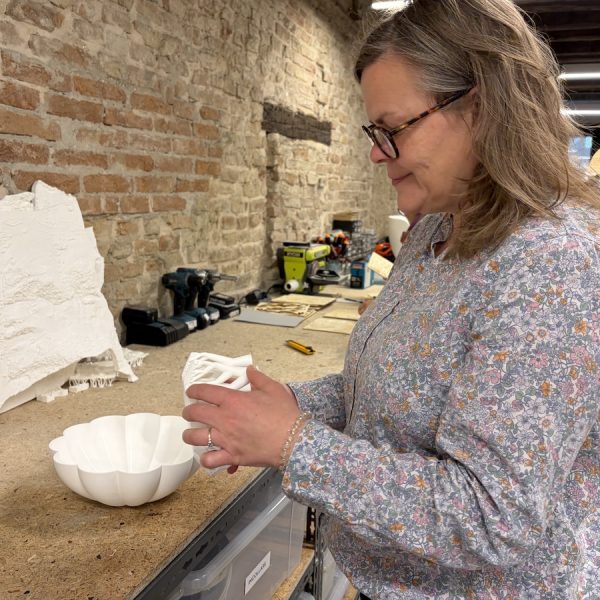
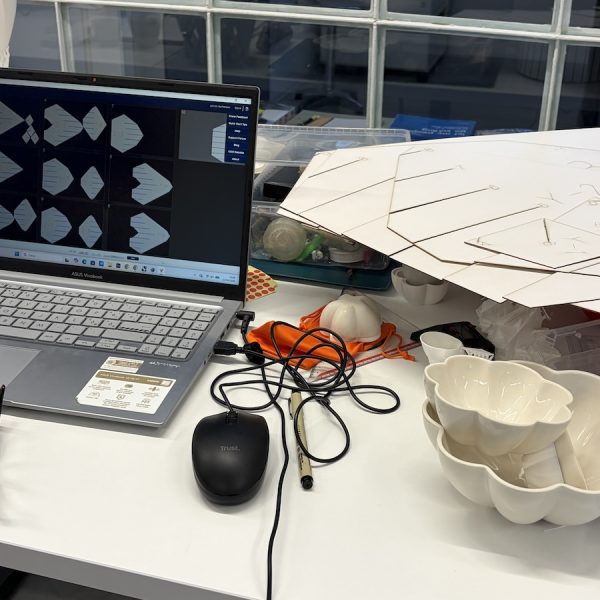
Ceramist Heidi Bach Hentze from Bornholm approached the residency challenge with enthusiasm and a clear objective: to produce tools and aids that would facilitate and speed up her process of making specific ceramic items. Residencies can indeed be useful spaces for free creative investigation but also to work on recognised everyday challenges that affect the production phase, thereby enabling process innovation to be explored. With the help of the Fablab team, she was able to 3D print objects that she will use as moulds to produce ceramic bowls and mugs. These moulds were either 3D modelled from scratch, based on drawings and digital shapes she already had, or derived from a 3D scanning process. The ability to create multiple digital variations of the bowls enabled her to conduct tests and adjust the sections, shapes, and dimensions, rapidly prototyping them to verify the final output. Through 3D modelling and printing, she was thus able to gain an initial overview of the product and define her preferred variations, which were subsequently produced as positive moulds that she can incorporate into her artisanal process. Finally, using a slicing app and then laser cutting, we produced templates that she can use to trace the thin shapes forming her intricate and beautiful artworks.
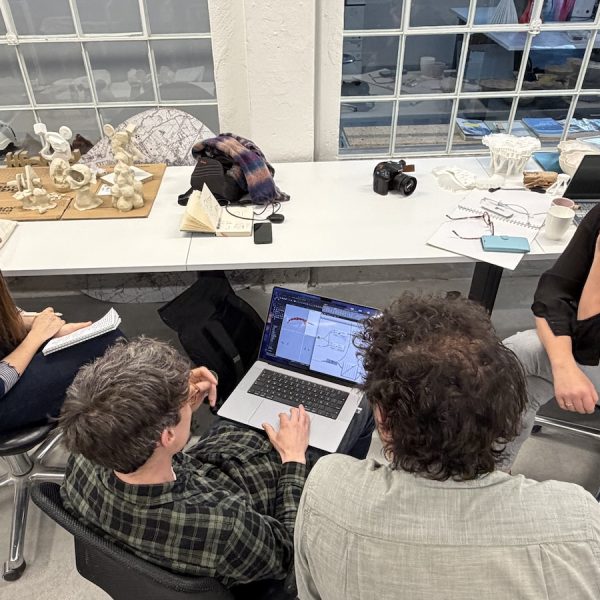
Once again, the Hephaestus residencies have proven to be an extremely useful and meaningful format for craft makers and innovators alike. The former are able to carve out a privileged space for experimentation for themselves, spending two weeks focusing on their own practice in an informal and stimulating environment, supported by a skilled mentor and an economic sustainability grant. The latter are able to validate the pivotal role of informal learning environments, such as Fablabs and Makerspaces, in fostering craft innovation and an impactful, bottom-up approach. Local informal innovation spaces provide a first-hand opportunity to discover, test and evaluate technologies, without the need of consistent investments.
Clearly, the combination of competencies, playfulness, curiosity and transdisciplinarity found in an active Fablab is key to building and spreading innovative ecosystems. This year, participants reinforced the value of such opportunities, as they were able to observe every stage of the process. Even if they are not willing to learn how to use the technologies themselves, they now have a more informed approach and know what questions to ask if they decide to rely on external suppliers or partners for certain manufacturing processes.
Formats such as residencies provide accessible immersion in new possibilities, and can be scaled and replicated in the logic of a pure FabLab network. They are capable of enabling positive cascading effects and spillovers, as more aware artisans can contribute their expertise and perspective to their circles and local networks. However, they require infrastructure and support, as well as a collaborative approach from all the actors in craft ecosystems (schools, associations and support organisations). Nevertheless, the benefits may be more widespread than for a single competent craft maker. We believe this is a relevant area for policymaking and reflection on how to build collaborative, resilient ecosystems.
We are now looking forward to the next round of residencies in the summer!